
Search Stopped Being a List of Links
Search used to be ten blue links. Now it is an answer engine that resolves many questions directly on the results page. This is called a zero-click search: a search that ends without the user visiting any website. In early 2026, around 68% of US Google searches ended this way, according to SparkToro's clickstream study. That is up from roughly 60% just two years earlier, as Search Engine Land reports.
AI is the main reason for the jump. Google's AI Overviews now appear on more than one in five searches, and when an overview shows up, clicks to websites fall by nearly 60%. Google's newer AI Mode passed one billion monthly users in 2026. Many people now ask ChatGPT, Gemini, or Perplexity instead of opening Google at all. The result is simple: users get their answer without clicking. Your brand can be read, trusted, and remembered, and still receive zero visits.
Why Clicks Became a Vanity Metric
A vanity metric is a number that looks impressive but guides no real decision, and traffic has become exactly that. The problem is that your traffic can fall while your business grows. A buyer can read about you inside an AI answer, never click, then search your name a week later and buy. The click never happened, but the sale did. A report built on clicks hides this completely, and it can make a healthy business look like it is shrinking.
Google's own advice now says the goal is to be the trusted source that AI systems cite, not just to rank a link — you can read Google's official guidance here. Rand Fishkin, who has tracked this shift for years, puts it plainly: in a zero-click world, chasing traffic is a poor goal.
What We Measure Instead
So if clicks are out, what is in? These are the metrics that actually show whether your marketing is working in 2026.
Leads by source. This is the number that pays your bills. It counts real enquiries, calls, and form fills, and it tells you which channel delivered each one. A lead from an AI answer is worth exactly as much as a lead from Google. Your report should open with this, not with a traffic graph.
Branded search volume. This measures how many people search for your name directly. Someone searching your brand already knows and trusts you, and AI cannot sit in the middle of a branded search. You can track it for free in Google Search Console, where rising branded searches signal a growing brand even when generic traffic falls.
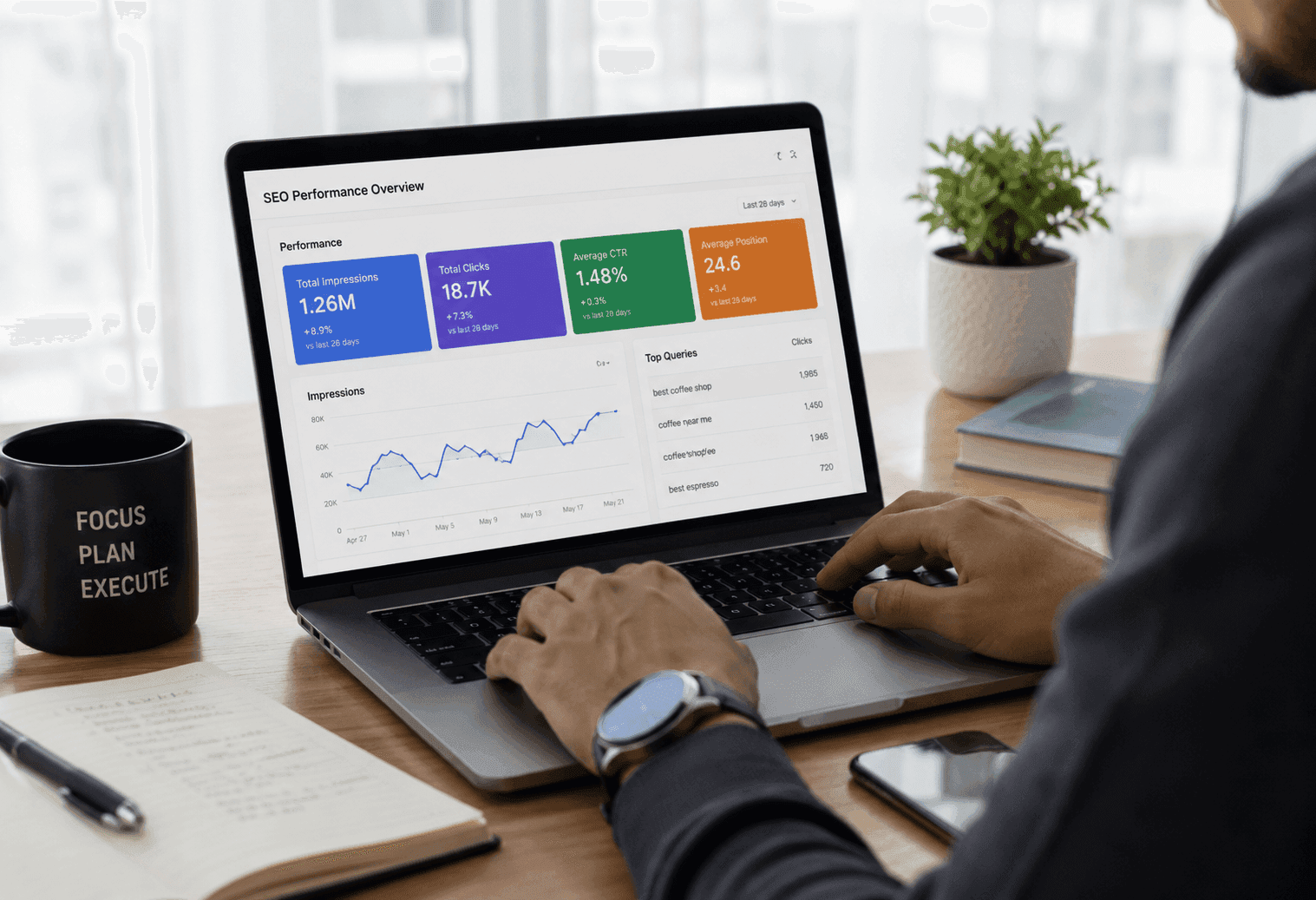
Impressions and visibility. An impression means your page appeared in the results, and it counts even when nobody clicks. In a zero-click world, being seen has real value. Search Console shows impressions for every query you rank for, so growing impressions mean growing awareness.
AI citations and share of voice. This tracks how often AI tools mention your brand. When ChatGPT or Gemini answers a question in your industry, are you named? Your competitors want that same spot, and your slice of those mentions is your AI share of voice. It is quickly becoming as important as your Google ranking.
AI-referred visits. Some people still click through from AI tools, and that traffic deserves its own line in the report. Inside GA4 you can group visits from ChatGPT, Perplexity, Gemini, and others. This reveals a channel most businesses are ignoring, which right now makes tracking it a quiet advantage.
Conversions, not pageviews. A pageview only proves someone landed; a conversion proves they acted. Measure engaged visits that turn into enquiries, because one strong lead beats a thousand empty pageviews.
What This Means for Your Business
The lesson is not that SEO is dead — it is that the scoreboard changed. Being clicked is no longer the win; being known, cited, and searched by name is. Businesses that update their metrics now will read their performance clearly, while those that keep chasing clicks will panic over the wrong numbers.
How Progbiz Reports Differently
At Progbiz, we build reports around what actually moves your business. We lead with leads by source instead of raw traffic, and we track your branded demand alongside your visibility inside AI answers. We show you where real enquiries come from, so you can invest with confidence. If your current report still opens with a traffic chart, it is already out of date. Talk to Progbiz for an SEO report built for how search actually works in 2026.