
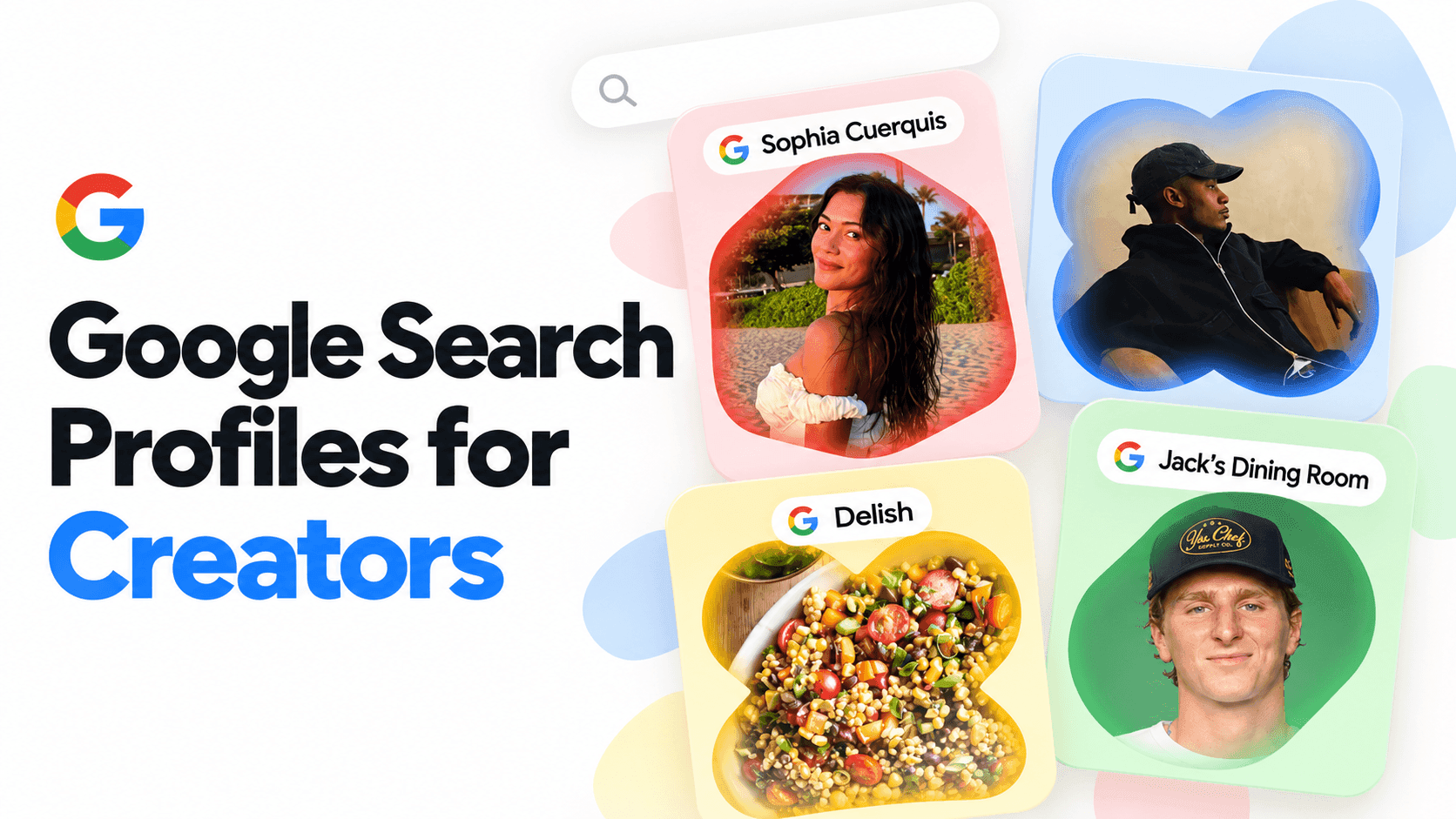
For brands, publishers, and content creators, this is not just another profile to maintain. It is a way to make Google’s branded search results more useful, more current, and more clearly connected to the official creator.
What Google Search Profiles Actually Are
A Search Profile is a Google-hosted page that appears within Search and Discover. It is designed to show who a creator is, what they publish, and where audiences can find them across the web.
Think of it as a bridge between a creator’s existing platforms. Rather than replacing a website or YouTube channel, it pulls attention toward the creator’s most recent and relevant content from one visible location.
A profile can include:
- The creator’s name, profile image, and short description
- Links to official platforms and websites
- Recent articles, videos, and social posts
- Content selected by the creator to feature
- A direct Search Profile URL that can be shared publicly
Why It Matters for SEO and Brand Visibility
Most creators already compete for visibility across Google, YouTube, Instagram, X, and TikTok. A Search Profile adds another controlled touchpoint in branded search results.
Better control of branded search results
When someone searches a creator’s name, Google may show a profile that reflects their current identity and recent activity. This can reduce confusion caused by outdated information, impersonation, or unrelated results.
A central place for fresh content
Google positions Search Profiles as a place to surface the creator’s newest articles, videos, and social posts. For publishers and creators publishing frequently, this gives fresh content another chance to be discovered.
Stronger connection between platforms
A creator’s website, YouTube channel, Instagram, X, and TikTok can be connected through one profile. This helps audiences move from discovery to the platform where they are most likely to follow, subscribe, or buy.
Useful for personal brands and publishers
For consultants, educators, news publishers, niche creators, and businesses with a strong founder-led brand, the profile can reinforce expertise and make the official source easier to identify.
Who Can Claim a Search Profile
Availability and eligibility are still limited. At present, creators and publishers in India and Canada can claim profiles, while Google has indicated that Brazil is next.
The main requirement is audience size. A creator needs at least 10,000 followers or subscribers on one supported platform:
Other conditions include:
- The claimant must be 18 or older.
- The creator must be located in an eligible country.
- The account and content must follow Google’s policies.
- One Google Account can manage up to 10 Search Profiles.
How to Claim Your Profile
The process is designed to be simple, but creators should prepare their brand details and connected accounts before starting.
1. Search for your name or brand on Google.
If Google has already created a Knowledge Panel, open it and look for an option such as More or View Search Profile. This may lead directly to the profile that can be claimed.
2. Open Google’s official claim page.
Go to profile.google.com/claim and sign in with the correct Google Account. If YouTube is your primary platform, use the Google Account linked to that channel.
3. Connect an eligible social account.
Link YouTube, Instagram, X, or TikTok. The selected account must meet the 10,000-follower or subscriber requirement.
4. Complete Google’s verification process.
Depending on the account, Google may request identity confirmation or additional verification before approving the claim.
5. Review every profile detail.
Check the display name, image, bio, website link, social links, and featured content. Consistency across Google and social platforms helps audiences instantly recognize the official profile.
6. Publish and keep it updated.
After approval, feature recent high-value content and update links whenever your website, channels, or branding changes.
Progbiz Takeaway
Google Search Profiles are most valuable for creators who already have an established audience and publish regularly. They do not replace strong SEO, a well-structured website, or quality content—but they can improve how a creator’s brand appears when people search for them directly.
For Indian creators and publishers, this is worth acting on early. A clean profile, accurate links, and regularly featured content can help turn branded searches into follows, subscriptions, and website visits.